ARTIST STATEMENT
Eliza Jouin is a New York–based photographer whose practice is driven by instinct, embodiment, and the generative possibilities of darkness. Working primarily with queer and trans subjects, Jouin creates images that honor the shadows—spaces where safety, ambiguity, and transformation coexist. Their process is both intentional and somatic, guided by a deep responsiveness to the moment and to the bodies they collaborate with.
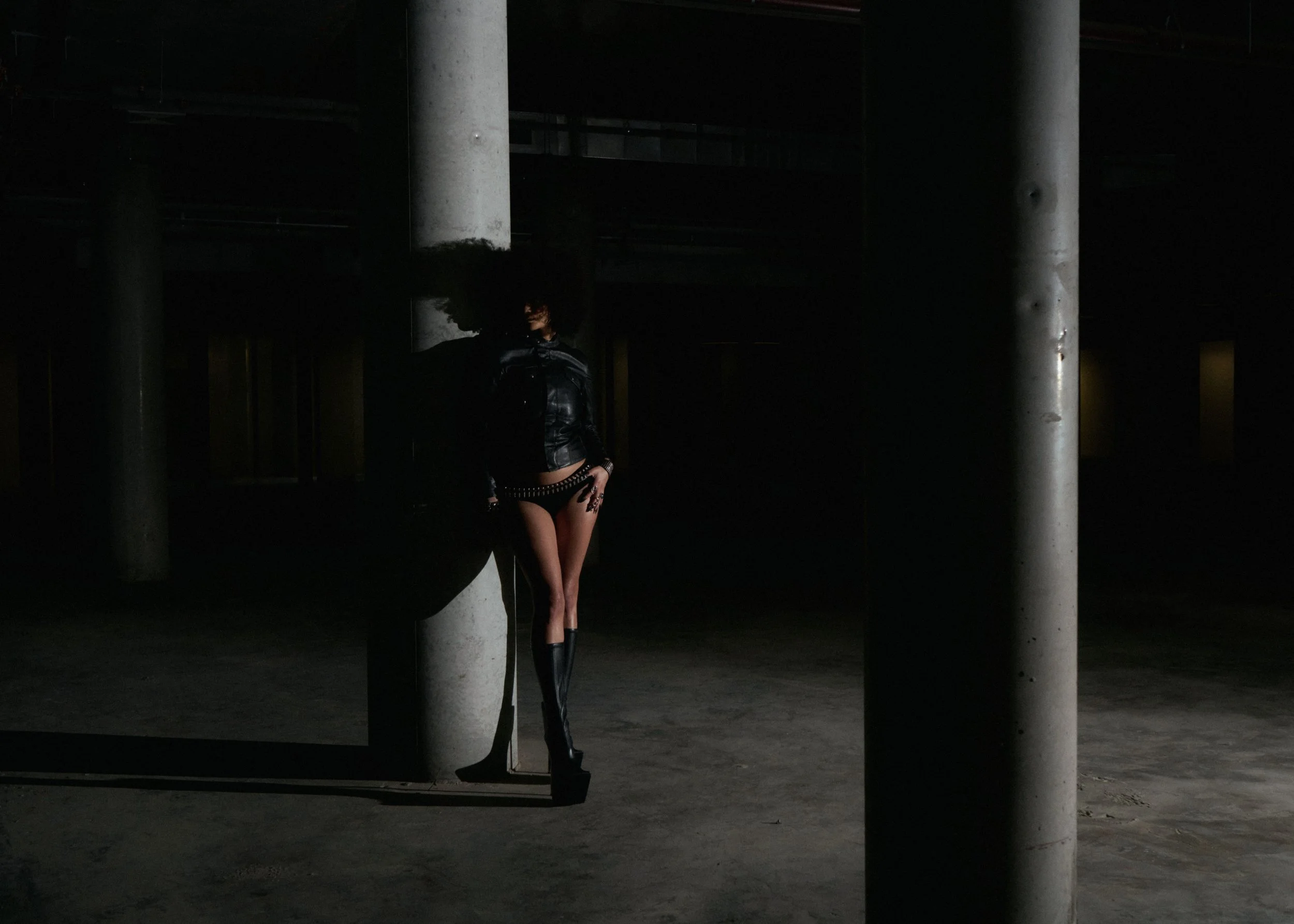
Jouin’s artistic process is deeply informed by their lived experience with traumatic a brain injury and photosensitivity. Because intense light can trigger physical pain, darkness has become both a refuge and a creative terrain. In this environment, they have developed a unique visual language rooted in minimal lighting, cinematic shadow, and emotional immediacy. Light is something they navigate delicately: turning toward it, away from it, and molding it with instinct rather than theory.
Memory and documentation sit at the center of Jouin’s practice. Following their injury, photography became a stabilizing force—a way to anchor fleeting experiences and make sense of time. The act of photographing is as vital as the resulting images: a process of grounding, witnessing, and survival.
Jouin is especially drawn to industrial and abandoned architectural spaces: vast, heavy, and austere environments that echo how it can feel to move through larger societal structures as a queer and trans person. This sensibility also appears in their use of a black void: a featureless, engulfing emptiness that carries the same imposing scale and severity. Whether darkness or concrete, the scale and monotony of these settings heighten the sense of a body positioned against something enormous and indifferent. Within them, their subjects’ presence—soft, defiant, playful, or exhausted—lands with particular force.
Across their body of work, Jouin embraces the ethereal, the uncanny, and the raw. Each image stands alone, yet together they build a language of queer vitality and somatic truth. Their photographs remain raw and intuitive, shaped by a deep trust of the dark.